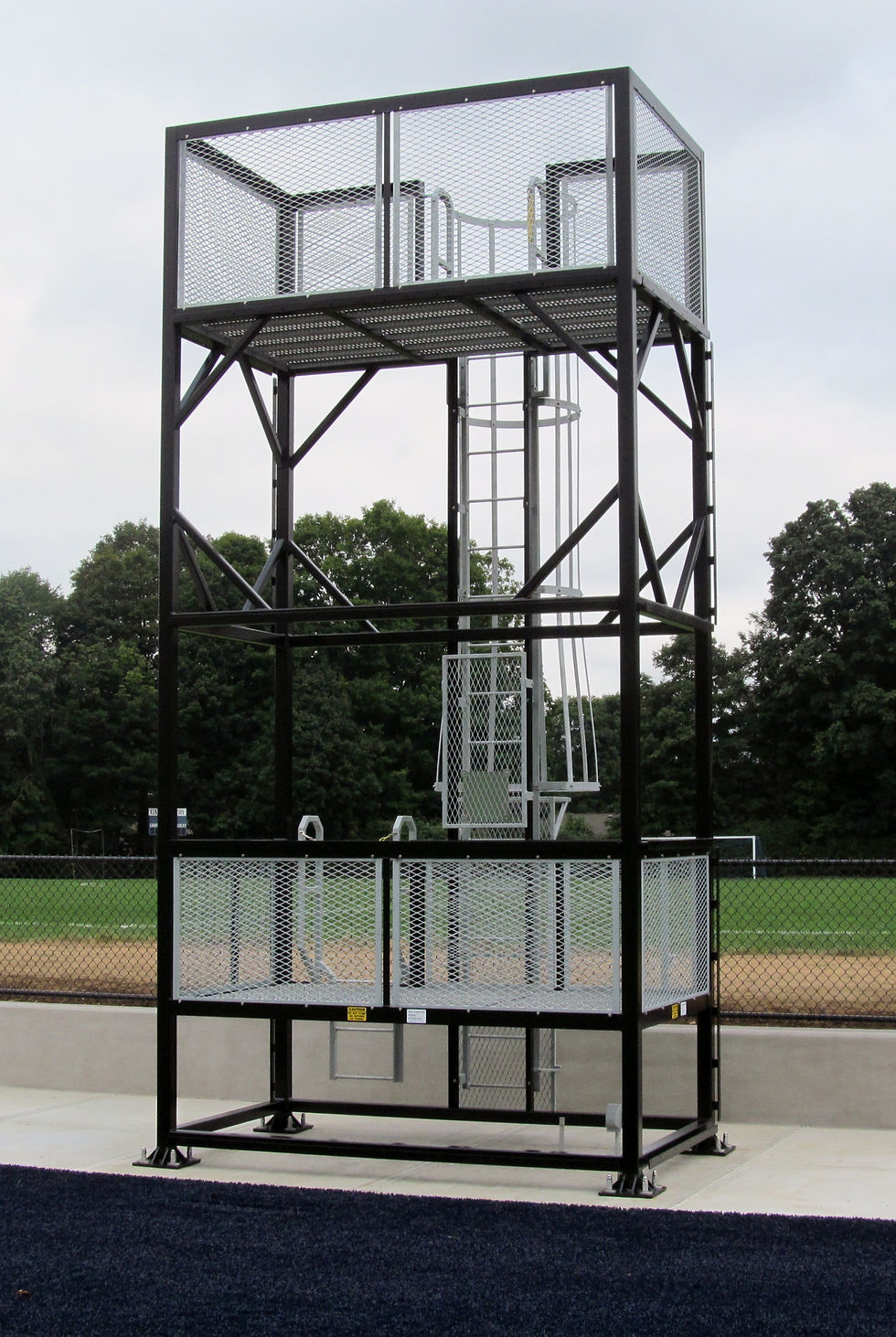
How Tall Should Your Field Tower Be? A Practical Height Guide (16' to 52')
Updated: Jun 22
Choosing a tower height is one of the first questions every band director, athletic director, or facilities manager runs into — and it's one of the easiest to get wrong. Too short, and you lose the sightlines that make the tower worth buying. Too tall, and you end up paying for height you don't need, plus the added cost, freight, and permitting that come with it.
This guide walks through how to think about tower height for your program, and the practical tradeoffs at each range.
Why height matters more than you'd think
The whole point of an observation tower is elevation — getting a director or coach high enough to see the full picture. For a marching band, that means reading drill formations across the entire field. For athletics, it might mean filming, coaching from above, or running a press position.
The higher you go, the flatter your viewing angle becomes and the more of the field you can take in at once. But the relationship isn't linear. The jump from 16 feet to 32 feet changes your sightlines far more than the jump from 40 to 52. Most of the value comes in those first few platforms of elevation.
A few things that affect how much height you actually need:
Field size — a full football field with end-zone-to-end-zone formations needs more elevation than a smaller practice field.
What you're watching — spacing and drill design require a higher, flatter angle than simply following a scrimmage.
Who's using it — a director running rehearsal has different needs than a parent volunteer filming from the platform.
Recording — if you're filming for review, a little extra height pays off in cleaner, more usable footage.
The height ranges, and who they're for
16' to 24' — Practice fields and smaller programs
This is the entry range. It gets you above the action and is plenty for smaller bands, younger programs, middle schools, or a secondary practice-field tower. It's the most budget-friendly option and the easiest to site, ship, and permit. The tradeoff: on a full field with complex formations, you may find yourself wishing for more elevation.
28' to 36' — The sweet spot for most high school programs
If you're a typical high school marching band working a full field, this is where most programs land. It gives you a clear read on drill formations end to end without overbuilding. For a lot of directors, somewhere around 32 feet is the "just right" height — high enough to see everything, not so high that cost and logistics balloon.
40' to 52' — Large programs, universities, and stadium use
Big programs, competitive corps-style bands, and college athletics often want the extra elevation. At this range you get the flattest sightlines and the best vantage for filming large, intricate formations or covering a full stadium field. It's a bigger investment with more to weigh on the structural and installation side, but for the programs that need it, nothing else compares.
A simple way to decide
If you're not sure, start with these three questions:
What's the biggest field you'll use it on? Size your height to your largest, most demanding use — not your smallest.
Are you designing and reading formations, or just watching? Formation work pushes you toward the taller end of your range.
Will you grow into it? A tower is a long-term investment. It's common to buy a little taller than you need today so the program doesn't outgrow it in a few years.
When in doubt, it's usually better to go one platform taller than to come up short — you can't add height to a tower after it's built.
Height is just one piece. Our band director tower buyer's guide covers the rest of the specs to get right, and if you're weighing materials, here's why we build in steel.
Every Field Towers model is built to order
We build custom steel towers from 16 to 52 feet, so you're never forced into a one-size-fits-all height. Browse our marching band director towers and most popular models, then tell us your field and how you'll use the tower.
Ready to talk through your project? Reach out for a quote and we'll help you figure out exactly what you need.
Putting a camera up there? See how to get the best angle on every play.